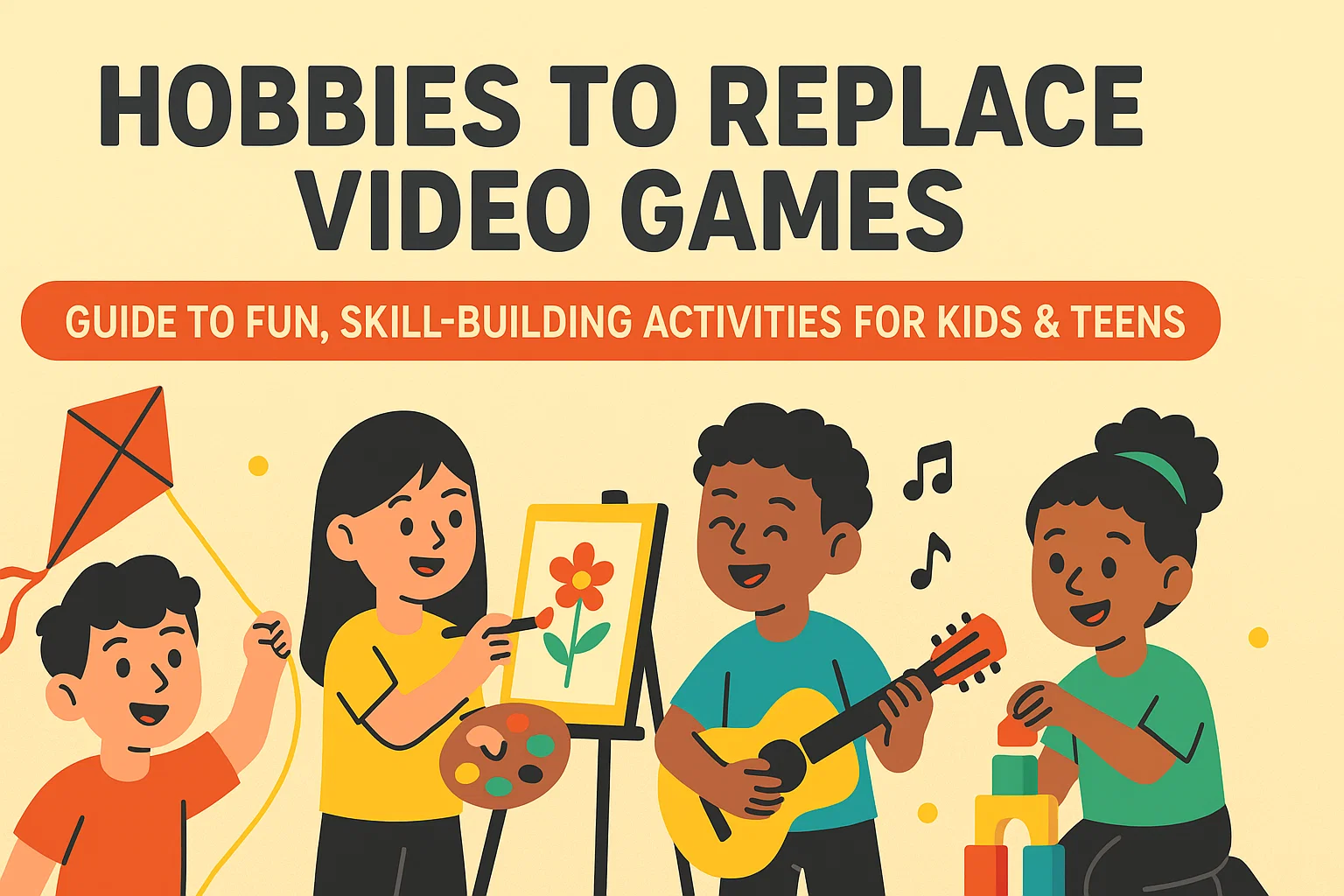
Video games can be exciting, engaging, and even educational—but many parents and teachers are noticing that kids today spend too much time glued to a screen. While gaming in moderation is perfectly fine, it’s important for children to explore hobbies that help them grow creatively, socially, and physically.
If you’re a kid or teen who wants to try something new—or a parent searching for healthy alternatives, this blog is your ultimate guide. We’ve gathered fun, meaningful, and skill-building hobbies that can replace or balance the video game time with real-world joy and learning.
Let’s dive into hobbies that spark curiosity, confidence, creativity, and adventure!
Why Consider Hobbies Beyond Video Games?
Before jumping into the list, it helps to understand why exploring new hobbies matters.
- Encourages creativity: Video games provide stories and environments, but hobbies encourage kids to create their own worlds—through art, building, writing, and more.
- Improves focus & patience: Hands-on activities help kids develop concentration and calmness.
- Builds real-world skills: Whether it’s woodworking, cooking, or learning music, hobbies help kids develop talents they’ll use throughout life.
- Better physical and mental health: Outdoor and movement-based hobbies help the body stay active and the mind stay healthy.
- Boosts confidence: Trying new things helps kids discover what they’re good at—and what they enjoy most.
Amazing Hobbies Kids Can Try today:
Now let’s explore some amazing hobbies kids can try today!
- Creative Arts & Crafting: Arts and crafts empower kids to express themselves and explore their imagination away from screens.
- Drawing & Sketching: Kids can learn to sketch characters, animals, fantasy worlds, or even comic book scenes.
- Painting: Watercolors, acrylics, and poster paints help kids bring their imagination to life with colour.
- DIY Craft Projects: Kids love making friendship bracelets, DIY jewellery, slime, origami, recycled crafts
- Clay Modeling: Clay is fun, sensory, and perfect for building figures and mini worlds.
Why it helps: Improves creativity, patience, and fine motor skills.
2. Reading & Storytelling
Books open endless possibilities—mystery, fantasy, science fiction, adventure, and more.
- Reading: Kids develop stronger vocabulary, better grammar, and deeper imagination.
- Writing stories: If your child loves video game plots, they’ll love writing their own stories.
- Journaling: Writing daily thoughts helps kids reflect and build emotional intelligence.
- Poetry: Kids can experiment with humour, rhythm, and creativity.
Why it helps: Strengthens language skills, imagination, and emotional expression.
3. Music & Performing Arts
Music and performance build confidence, discipline, and creativity.
- Learning an Instrument: Guitar, keyboard, violin, drums, flute—the options are endless.
- Singing: Kids can take lessons or join a choir.
- Dancing: Hip-hop, classical, ballet, freestyle—movement is awesome for health.
- Acting & Theatre: Kids develop stage presence, expression, and storytelling skills.
Why it helps: Improves memory, coordination, rhythm, and confidence.
4. STEM and Technology Hobbies
If your child loves gaming, chances are they’ll love creating things too.
- Coding: Kids can learn to build games, design animations, code robots, create websites by using tools like Scratch, Python, Minecraft Education, and Roblox Studio make learning exciting.
- Robotics: Building robots encourages problem-solving and engineering thinking.
- 3D Design & Printing: Kids can create models using free tools like Tinkercad.
- DIY Science Experiments: Volcanoes, slime, circuits, growing crystals—fun and educational!
Why it helps: Teaches logic, creativity, engineering, and problem-solving.
5. Outdoor Hobbies & Sports
Getting outside is one of the best ways for kids to balance screen time.
- Cycling or Scootering: Great for fitness and fun adventures.
- Swimming: A full-body workout and a valuable life skill.
- Skating or Skateboarding: Improves balance and confidence.
- Team Sports: Football, cricket, basketball, volleyball—teamwork builds leadership.
- Nature Exploration: Bird-watching, gardening, hiking, or bug spotting spark curiosity.
Why it helps: Boosts physical strength, teamwork, and resilience.
6. Building & Engineering Hobbies
Kids who enjoy Minecraft and building games often love real-world building activities.
- LEGO Building: Kids can build cars, spacecraft, houses, machines, entire worlds
- Woodworking: Simple DIY projects like small shelves, decorations, or birdhouses.
- Mechanical Kits: Gears, motors, circuits—great for engineering minds.
- Model Making: Kids can build miniature models of cities, trains, bridges, and landscapes.
Why it helps: Enhances spatial awareness, patience, and creativity.
7. Cooking & Baking
Cooking is a fun and practical life skill. Kids can start with fruit kebabs, sandwiches, muffins, pancakes, simple snacks, decorating cupcakes. Teens can learn more advanced recipes.
Why it helps: Builds independence, responsibility, and creativity.
8. Mindfulness & Relaxing Hobbies
Some hobbies help kids slow down and recharge.
- Yoga: Improves flexibility and calmness.
- Meditation: Teaches kids to manage emotions.
- Puzzle Games: Sudoku, crosswords, and brainteasers sharpen thinking.
- Coloring: Great for relaxation and artistic expression.
Why it helps: Reduces stress and boosts concentration.
9. Social & Community Hobbies
Activities that help kids interact with others and contribute positively.
- Volunteering: Helping animals, planting trees, or community cleanups.
- ✦ Group Clubs: Chess club, science club, art club, drama club.
- ✦ Board Games: Encourage strategic thinking and family bonding.
- ✦ Debate or Public Speaking: Great for confidence and communication skills.
- Why it helps: Builds friendships, leadership, and social skills.
10. Pet Care & Animal-Related Hobbies
If kids love animals, these hobbies are perfect.
- Pet training: Teaching tricks or caring for a pet.
- Animal photography: Kids can capture cute pet moments!
- Learning about wildlife: Research animals, habitats, and conservation.
Why it helps: Teaches responsibility and empathy.
11. Adventure & Exploration Hobbies
For curious kids who love action and discovery:
- Geocaching: A real-life treasure hunt using GPS.
- Camping: Learning survival skills and bonding with nature.
- Astronomy: Using a telescope to explore stars and planets.
- Kite Flying: Fun, relaxing, and exciting outdoors.
Why it helps: Encourages courage, curiosity, and problem-solving.
How to Help Kids Transition Away from Video Games
It’s not always easy to replace gaming habits, but small steps help.
Set realistic screen limits
Start with 1–2 hours per day.
Introduce hobbies gradually
Kids are more open to new hobbies when they’re fun.
Choose activities based on your child’s interests
For example:
- Game lovers → coding or robotics
- Creative kids → art or music
- Active kids → sports or dance
Be a role model
Kids are more likely to read, paint, or explore if they see adults doing it too.
Celebrate progress
Small achievements keep kids motivated.
Conclusion: Discover a World Beyond Video Games
Video games can be fun, but a rich life includes many more adventures. Hobbies help kids discover new strengths, explore creativity, build real-life skills, and develop confidence. Whether it’s painting, coding, baking, sports, dancing, robotics, or reading, hobbies shape kids into well-rounded, happy, and imaginative individuals.
Replacing (or balancing) video games isn’t about removing fun—it’s about adding more fun in healthier, more meaningful ways.