Is learning coding worth it in 2026?
AI can already write code, so a lot of parents are quietly asking whether it's still worth their child learning. Here are the ten most common doubts, answered honestly, and the myths they put to rest.
Join 1000+ students who took a lesson in the last 24 hours!
Students
Countries

4.6 / 5 stars
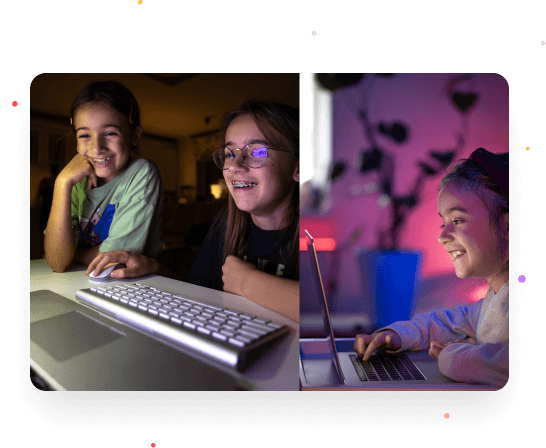
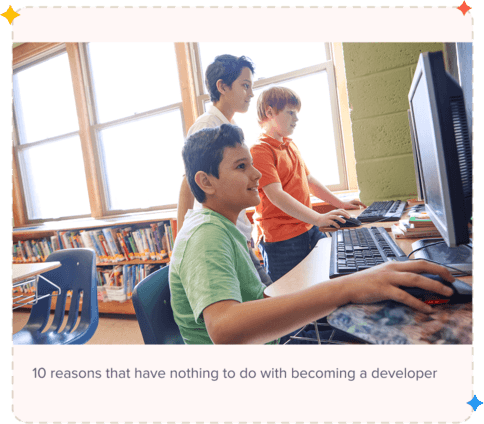
Why learn to code? 10 reasons that have nothing to do with becoming a developer
TL;DR
Most answers lead with jobs and salaries. The real return is quieter and far bigger: coding teaches a child how to think - to break a problem down, find what's wrong, and try again.
And that thinking travels. It shows up in their maths, their writing, their science, and in how calmly they face anything they haven't seen before.
It also compounds. A child who starts at eight has four years of problem-solving instincts by twelve - built in the window when habits form most durably.
In a world run by AI, the logic underneath matters more, not less. So is it worth it? For a way of thinking they'll use everywhere - yes.
Myth 1: If AI can write code, there's no point learning it
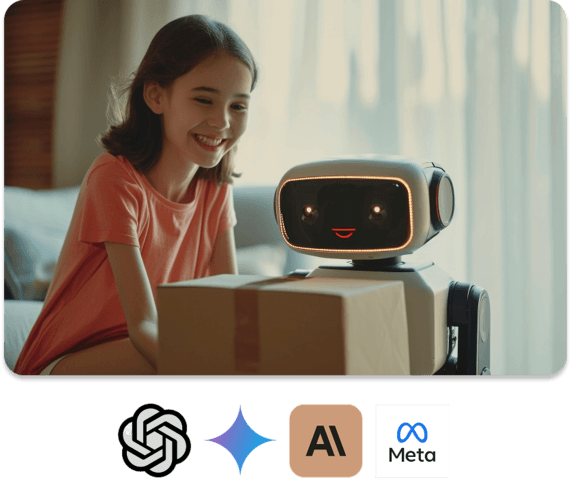
It is the most reasonable doubt a parent has in 2026, and it dissolves the moment you look at what AI actually does. AI is extraordinary at generating syntax, the lines of code themselves, on demand. What it cannot do is the thinking around the code: deciding which problem is worth solving in the first place, recognising when an answer is subtly wrong, and choosing between two solutions that both technically work. Those judgments are the real substance of programming, and they are built only by doing the work of making things yourself. So the arrival of capable AI does not retire the case for learning to code. It sharpens it, because the people who can direct and check what AI produces are the ones who will matter most.
What AI actually changes
AI raised the value of judgment, not lowered it
A machine can now generate code in seconds, but it cannot tell whether that code solves the right problem or solves it well. The child who can is worth more in an AI world, not less.
What This Means for Your Child
The skill worth giving your child is not typing code faster than a machine. It is the judgment to direct that machine: knowing what to ask for, spotting when the answer is wrong, and fixing it when it breaks. That is the part AI cannot hand them, and it is exactly what learning to code builds.
Myth 2: My child needs to be good at Math first
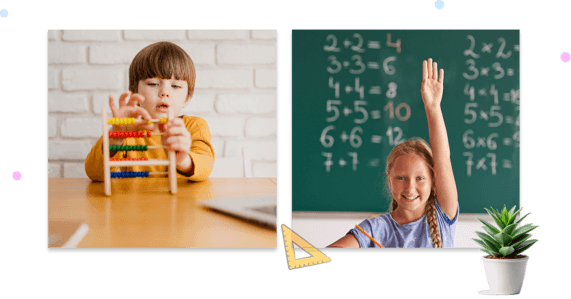
Plenty of parents assume coding sits downstream of maths, so a child who struggles with numbers should fix that first. In practice the relationship usually runs the other way. Coding takes the abstract ideas that make maths feel pointless to a child, variables, logic, sequences, and gives them an immediate, visible purpose: making a game work, making a story run. When a concept has a reason to exist, it stops being a rule to memorise and becomes a tool to use. That is why so many parents report their child growing more confident with maths after starting to code, not before.
The order most parents get backwards
Coding tends to build maths confidence rather than requiring it first
Early coding gives abstract ideas a visible purpose, so numbers and logic become tools instead of rules to memorize. Many parents report their child's maths confidence rising after they start coding.
What This Means for Your Child
If you have been holding off because your child finds maths hard, this is the reassurance to start anyway. Coding often becomes the side door into maths that the front door never opened, because it makes the abstract concrete and gives a real reason to care about getting the logic right.
Myth 3: Coding is just more screen time
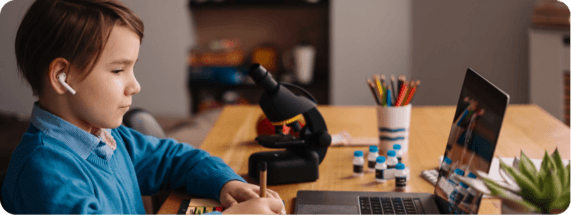
This worry is healthy, and it rests on a single hidden assumption: that all screen time is the same. It is not. The studies that link heavy screen use to weaker attention and poorer sleep are measuring passive consumption, the endless feed engineered to hold a child's attention for them. Coding is the opposite kind of activity on the very same device. The child is the one giving instructions, testing ideas, and building something that did not exist before. Treating those two as interchangeable is like treating reading a book and watching it on autoplay as the same thing because both involve a screen.
What This Means for Your Child
Your child will spend hours on a screen regardless. The useful question is not how to eliminate that, which is rarely realistic, but how to convert some of it from consuming into creating. Coding is one of the few activities that does exactly that, which is why it sits in a different category from the screen time you ration.
Myth 4: Coding can wait until secondary school
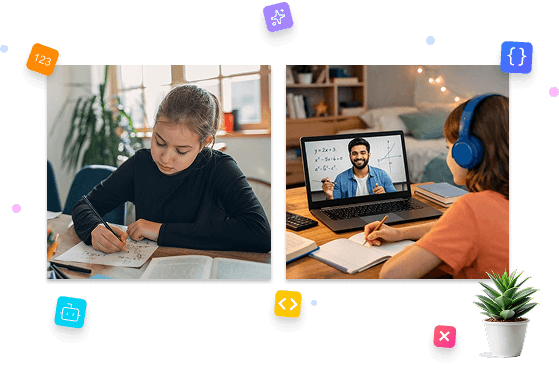
The instinct to wait until secondary school feels responsible, as though coding is an advanced subject a child should grow into. The research quietly contradicts it. The primary-school years are when the brain is most receptive to logic, pattern, and structured thinking, and controlled studies have found the youngest learners making the largest gains. A skill that a seven-year-old absorbs almost without noticing can take a twelve-year-old real, deliberate effort to build. Starting early is not about pushing a child ahead. It is about letting them learn the thing while it is still easy.
Why starting earlier works better
The youngest learners tend to gain the most from coding
The primary-school brain is unusually receptive to logic and structured thinking, and skills that feel effortless at seven take real effort to build by twelve.
What This Means for Your Child
Waiting feels like the safe, sensible choice, but the research gently flips it. The years when coding is easiest to absorb are the ones most parents skip. Starting now does not pressure your child. It simply lets them build the foundation while it is still easy, so everything after it comes more naturally.
Myth 5: It's only worth it if they become a programmer
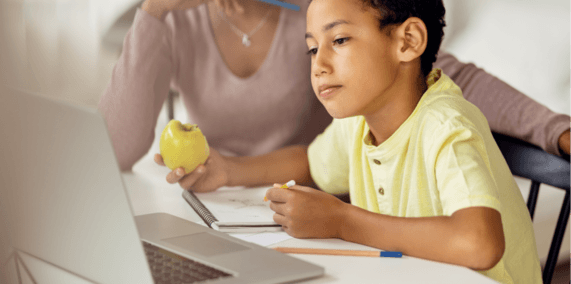
Behind this doubt is a narrow idea of what coding is for: a job in software, or nothing. But the most valuable things coding gives a child have almost nothing to do with employment. It is closer to learning a musical instrument. Very few children who learn piano become concert pianists, yet almost all of them gain focus, discipline, and the patience to practise something hard. Coding works the same way, building a way of thinking and a kind of confidence that a child carries into every subject and every path they eventually choose, whether or not they ever write a line of professional code.
Coding as a thinking gym
The real return shows up even if your child never writes software
Most children who code will not become engineers, just as most who learn an instrument never perform. The lasting payoff is focus, structure, and resilience, which transfer to any path.
What This Means for Your Child
Reframe coding the way you would music or sport: the point is not to produce a professional, it is what the practice builds in the child. A child who codes gains a way of approaching hard problems that serves them in any subject and any career, long after the specific language is forgotten.
Myth 6: My child isn't technical, so it's not for them
Some parents quietly decide coding is not for their child because the child does not seem like a "computer person." But "technical" is not a fixed trait a child either has or lacks. It is a skill, and like any skill it is built through guided practice. Modern block-based tools let a child start with the logic of coding without wrestling with typing or jargon, so the first successes arrive quickly and the confidence follows. The children who do well are rarely the ones who arrive already comfortable with technology. They are the ones willing to stay with a problem a little longer, which is precisely the habit coding is so good at teaching.
Why technical is a skill, not a trait
Persistence predicts success far more than any natural gift does
Block-based tools let any child start with the logic rather than the jargon, and the first wins come quickly. "Technical" is a skill built through guided practice, not a personality type.

What This Means for Your Child
If your child does not seem like a natural with computers, that is not a verdict, it is a starting point. The children who do well at coding are rarely the ones who arrive already knowing. They are the ones who stay with a problem a little longer, which is a habit coding itself teaches.
Myth 7: Coding is just a passing trend
It is fair to be wary of trends, and coding has certainly been hyped. But the thing worth giving a child was never a particular language or platform, all of which will date. It is the underlying way of thinking: the ability to break a problem into parts, reason through it logically, and create something with technology rather than just consume it. That capacity does not go out of fashion. If anything, as AI weaves itself deeper into daily life, understanding how these systems work is becoming more essential, not less, which makes the worry about a passing fad almost exactly backwards.
Why this is not a passing fad
The durable skill is learning how to think rather than which language to use
Languages and platforms come and go, but breaking problems down, reasoning through logic, and creating with technology only get more central to everyday life.

What This Means for Your Child
You are not betting on a specific language staying relevant. You are giving your child a way of thinking that outlasts every tool it is taught through. Even if the coding tools of 2040 look nothing like today's, the child who learned to think this way will adapt to them easily.
"Code has become the 4th literacy. Everyone needs to know how our digital world works, not just engineers."
— Mark Surman, Executive Director, Mozilla Foundation
Myth 8: They use tech all day, so they already understand it
Today's children are astonishingly fluent with technology, swiping and navigating apps before they can read. It is easy to mistake that fluency for understanding. But using a tool and grasping how it is built are entirely different things, and the gap between them is widening as the technology gets smoother and more invisible. A child can use a hundred apps without ever encountering a single idea about how any of them actually work. Coding is what bridges that gap, moving a child from being a confident passenger in the digital world to someone who can read the map and take the wheel.
Why using is not the same as understanding
A child can be fluent with apps yet a stranger to how they are built
A child can navigate a phone effortlessly and still have no idea how any of it works. Coding is what moves them from being shaped by technology to being able to shape it.

What This Means for Your Child
Comfort with devices is easy to mistake for understanding, but they are not the same thing. Your child swiping confidently through apps is a skilled consumer, not a builder. Coding closes that gap, turning the technology they take for granted into something they can question, control, and create with.
Myth 9: AI will take all the coding jobs anyway
This is a sharper version of the AI worry, and it deserves a clear-eyed answer rather than reassurance. Yes, AI is automating the routine, repetitive parts of programming, and that will reshape the job market. But it is simultaneously raising the value of people who can do what AI cannot: frame the right problem, judge the quality of an answer, and combine code with real understanding of a field. Those people are needed across medicine, finance, design, and almost everywhere else, not just in software. The skill is not vanishing. It is moving up the value chain, toward judgment, and judgment is exactly what learning to code develops.
How the skill is really changing
Demand is rising for the people who can direct and judge what AI produces
AI is automating routine tasks, but it is increasing the value of people who can evaluate, combine, and correct what it produces across nearly every field.

What This Means for Your Child
The future your child is heading into rewards people who understand how technology works, not the ones who hand all judgment to it. Learning to code now is less about claiming a coding job and more about becoming the kind of person every field will want: someone who can direct the tools rather than be replaced by them.
Myth 10: Whatever they learn now will be obsolete
Coding is the native language of robotics and the entry point to the physical world of STEM.
Age 6+Can program physical objects
spatial reasoning beyond screenSTEM connectionDirect pathway
robotics, biomedical, autonomous systemsThrough 2030Fastest-growing roles
robotics & automation (WEF)
What This Means for Your Child
A child who has learned to give precise instructions to a computer has already built the core thinking skill that makes robotics intuitive rather than overwhelming. Starting with Scratch for kids is one of the most effective ways to build that foundation. Professor Marina Bers's TangibleK research at Boston College found that children as young as 6 could program physical objects, developing spatial reasoning and systems thinking that extended far beyond the screen.
Every parent I speak with wants the same thing: a child who is genuinely prepared for whatever comes next. What the research kept showing us, and what we see every day inside Codingal classrooms, is that one skill is doing more for children's cognitive development, academic confidence, and long-term resilience than almost anything else in the curriculum. The ten benefits on this page are peer-reviewed findings, replicated across thousands of children, and recognized by education policymakers worldwide. Coding does not just add a skill. It changes how a child thinks, how they handle difficulty, and how they see themselves when they face a problem they have never encountered before. That shift, once it happens, stays.

If you're wondering specifically what happens inside your child's brain when they code, Codingal's Co-founder & CEO Vivek Prakash's deep dive into the neuroscience is the clearest summary we've seen.
Impact on students
Helping children build confidence, curiosity and real skills
Explore our courses
Coding, AI, Math, and Public Speaking courses to spark creativity and future-ready skills, with flexible self-paced paths for every learner.

AI and Machine Learning
Master the fundamentals of AI and machine learning

Scratch Programming with AI
Learn coding with visual blocks and AI concepts

Python Champion
Become a Python programming expert

Game Development for Kids
Create your own games from scratch

Website Development
Build modern, responsive websites

App Development for Kids
Create mobile apps for iOS and Android

AI & Data Science for Teens
Analyze data and build AI models

Roblox Champion
Design and code games on Roblox

AP Computer Science A
Prepare for the AP CS exam

IOI Algorithms
Master competitive programming
About Codingal
Codingal is a fast-growing edtech company on a mission to help kids fall in love with coding and AI through live classes and hands-on projects. What makes this journey special is our people: teachers, builders, and problem-solvers who genuinely care about learning.
We work as one team across curriculum, engineering, design, growth, operations, and support, always improving how we teach, how we train teachers, and how students learn. If you are a teacher who loves mentoring, or a parent looking for a learning experience that is personal, structured, and future-ready, welcome.

Frequently asked questions
The biggest benefits of coding have very little to do with a software career. Coding builds the way a child thinks, teaching them to break problems into steps, reason through logic, and keep going when something does not work. Those habits carry into maths, writing, and any path a child eventually chooses, which is why coding is worth learning even for a child who will never write professional software.
Yes, and arguably more than before. AI is very good at generating code, but it cannot decide which problem is worth solving, judge whether an answer is correct, or weigh the trade-offs between solutions. Those judgments are what learning to code develops in a child, and they become more valuable as AI handles the routine work. The child who understands how code works is the one who can direct these tools well.
Around ages 6 to 8 is the sweet spot, though block-based and screen-free tools work well from as early as 4 or 5. The primary-school years are when the brain is most receptive to logic and structured thinking, and research suggests younger learners often gain the most. Starting any time before secondary school still pays off.
No. Early coding is closer to creative puzzle-solving than algebra, and it often improves a child's confidence with maths by giving abstract ideas a clear purpose. Many parents find their child becomes more comfortable with numbers after they start coding.
A child building with code is doing the cognitive opposite of a child passively scrolling, on the very same device. The research that links heavy screen use to weaker attention is about passive consumption rather than active creation. Coding is one of the few ways to turn screen hours into something genuinely productive.
The most durable gains are focus, structured thinking, resilience, and the confidence that comes from building something real. A child who codes learns to plan before they act, treat mistakes as information, and stay with a hard problem longer. These show up across school and everyday life long before any career question arises.
The specific languages and tools will change, but the underlying way of thinking will not. Breaking problems down, testing ideas, and reasoning through logic are durable skills that transfer to whatever technology arrives next, including the AI tools that will keep evolving around your child.
A live teacher can see the exact moment a child's reasoning breaks down and guide them through it in real time, which pre-recorded videos and passive apps cannot do. That real-time guidance is what turns copying into genuine understanding.
The trait that predicts success is persistence rather than any natural gift, and block-based tools let any child start with the logic instead of the jargon. The fastest way to find out is to watch one lesson and see how your child responds to building something of their own.
Often within a few weeks, though the change rarely looks like coding. Parents tend to notice it first in how their child approaches a hard homework problem or a setback, meeting it with more patience and a plan.
Most children begin with a visual, block-based tool like Scratch, which teaches the logic of coding without the friction of typing. From there the natural progression moves into text-based languages such as Python, and later into web, apps, AI, or robotics depending on what captures their interest. The right starting point depends more on a child's age and confidence than on any particular language.
Consistency matters more than volume. A regular weekly session, with small projects in between, builds fluency far more effectively than occasional long bursts. For most children, a steady rhythm of around one structured class a week is enough to keep momentum and see real progress.
For most children it is easier to start than parents expect, because block-based tools let them focus on the logic rather than the syntax, so the first wins come quickly. The genuinely challenging part is patience during debugging, which is also where the most valuable thinking gets built. With steady practice the difficulty eases while the benefits keep growing.
Yes. The planning, focus, and logical reasoning that coding strengthens are the same skills that underpin maths, writing, and problem-solving across the curriculum. Many parents notice their child approaching homework more methodically and giving up less easily within a few months of starting.
Playing a game and building one are very different activities, even though both happen on a screen. Gaming is something a child consumes, while coding turns that same interest into something they create and control. For many children, a love of games is the perfect on-ramp, because building their own gives the underlying logic an immediate purpose.