Why should kids learn to code in 2026, when AI can already write it?
It's the question almost every parent is quietly asking: if a chatbot can write a working program in seconds, why should my child spend years learning to do it by hand? Here's the honest answer. Coding was never really about typing instructions a machine can now generate for you. It's about how your child learns to think: to break a hard problem into pieces, test an idea, and keep going when the first attempt fails. AI hasn't made that obsolete. It's made it the most valuable skill your child can learn.
好評につき、お早めにお申し込みください!
生徒
国

4.6 / 5 stars
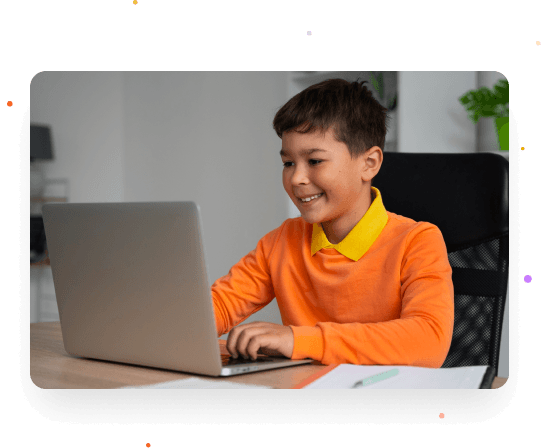
10 reasons kids should learn to code in 2026
Why code ?
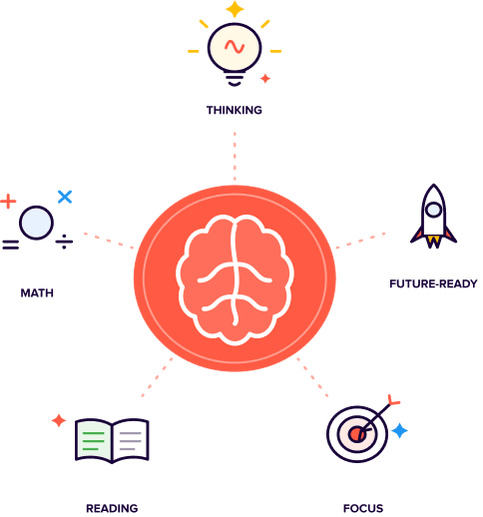
Coding isn't really about computers. It's the clearest way to teach a child how to think - to take something big and confusing and break it into small steps they can actually solve.
Every class is a quiet workout for the brain. Memory, focus and reasoning all grow stronger - the very skills that shape how well your child does in every subject, not just this one.
And it doesn't stay on the screen. Kids who code often lift their math, reading and problem-solving, carrying that confidence into school as the work gets harder.
More screen time won't do it. More homework won't either. Changing how your child thinks about problems will - and that is exactly what coding does.
AI can write code, but it can't think for your child
The fear is reasonable. If a chatbot writes a working program in seconds, the skill looks finished. But what AI produces is syntax: the typed instructions. What it can't do is decide which problem is worth solving, tell whether the output is actually right, or weigh the trade-offs when there's no clean answer. Those judgments are exactly what a child develops by building things in code.
As AI gets more capable, those human skills don't get cheaper. They get rarer, and more valuable. The child who understands how code works isn't competing with AI. They're learning to direct it.
What AI actually automates
Syntax, yes. Judgment, no.
AI can generate the code in seconds. It can't decide what's worth building, judge whether the result is correct, or weigh the trade-offs when there's no clean answer. Your child can, and that's the part that keeps getting more valuable.
What This Means for Your Child
In a world where AI can produce code on demand, the children who pull ahead won't be the ones who type fastest. They'll be the ones who can look at what a machine produces and ask the harder questions: Is this actually right? Is this even the problem worth solving? Coding is where your child builds that judgment, and it's the one advantage that grows stronger as the tools get smarter, not weaker.
Coding teaches a way of thinking, not just a language
Strip away the jargon and a child who is coding runs the same loop hundreds of times a session: break a big goal into small steps, test one change at a time, read errors as clues rather than failures, and build something that actually runs. Educators call it computational thinking.
Your child will reach for that loop long after they forget any specific language, every time they meet a problem nobody has handed them the answer to. Research shows children as young as four can engage meaningfully with these core ideas, which is why the habit is worth building early.
Seeing the system
Breaking a big, vague problem into steps small enough to actually solve.Questioning the output
Noticing what repeats, so a solution can be reused instead of rebuilt each time.Creating, not just consuming
Designing a clear, ordered set of steps that reliably reaches the result.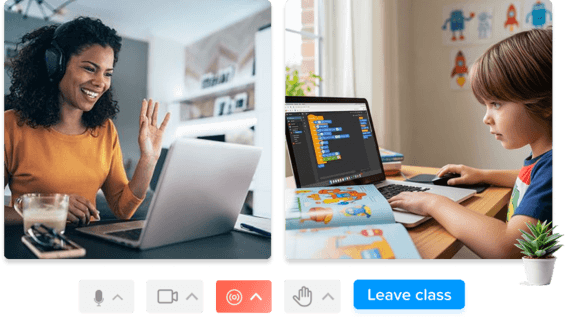
What This Means for Your Child
The specific language your child starts with, whether Scratch, Python, or whatever comes next, will change. What stays is the habit underneath it: meeting something unfamiliar and instinctively breaking it into pieces small enough to solve. That habit is the real takeaway. It isn't a coding skill your child uses in class. It's a thinking skill they carry into every problem nobody has handed them the answer to yet.
It turns screen time from a worry into an advantage
A US parent survey in 2025 found children averaging around 21 hours of screen time a week against an ideal closer to 9, with roughly 60% of parents feeling guilty about it. The instinct to limit screens is sound, but it treats every screen as the same screen. It isn't.
A child scrolling short videos and a child debugging a Scratch game are using identical hardware to do opposite things. One is being fed a stream designed to hold attention. The other is directing the machine: deciding, testing, fixing, building. Your child will spend hours on a screen regardless. Coding is one of the few ways to convert some of those hours from consuming into creating.

What This Means for Your Child
The specific language your child starts with, whether Scratch, Python, or whatever comes next, will change. What stays is the habit underneath it: meeting something unfamiliar and instinctively breaking it into pieces small enough to solve. That habit is the real takeaway. It isn't a coding skill your child uses in class. It's a thinking skill they carry into every problem nobody has handed them the answer to yet.

"Two years at Codingal taught me my ideas don't have to stay in my head."
From the Codingal Classroom
— Zaviyar Khattak, Codingal student
It gives your child agency in a world run by algorithms
Your child is growing up inside systems they didn't build and can't see: feeds, ranking algorithms, AI tools quietly deciding what they read, watch, and believe. A child who understands, even roughly, how those systems are made relates to them differently. They ask how does this work and who decided that, instead of simply absorbing the output.
The writer Douglas Rushkoff framed the choice as "program, or be programmed," and the Raspberry Pi Foundation built its 2025 case for kids and coding around exactly that idea: coding gives young people agency in a digital world, and without it they risk being shaped by systems they don't understand.
Seeing the system
Recognising that feeds, rankings, and recommendations are designed choices.Creating, not just consuming
Shifting from someone technology happens to, into someone who can shape it.Questioning the output
Asking "how does this work, and who decided that?" instead of simply accepting what appears on screen.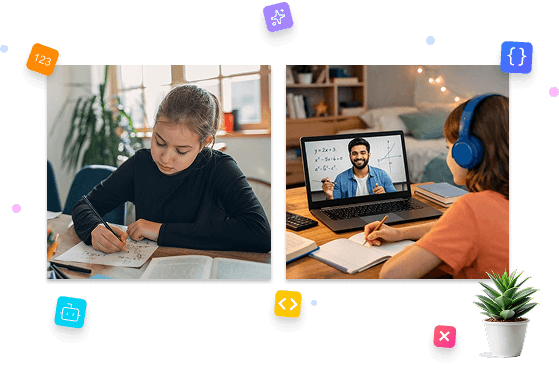
What This Means for Your Child
A child who knows a feed is built, not found, treats it differently. They are harder to manipulate, slower to take an algorithm's word as truth, and more likely to ask who benefits when a screen decides what they see next. That isn't paranoia. It's literacy. In a decade where AI will increasingly shape what your child reads, watches, and believes, understanding how those systems are made is one of the most practical forms of freedom you can give them.
The thinking quietly transfers to every subject
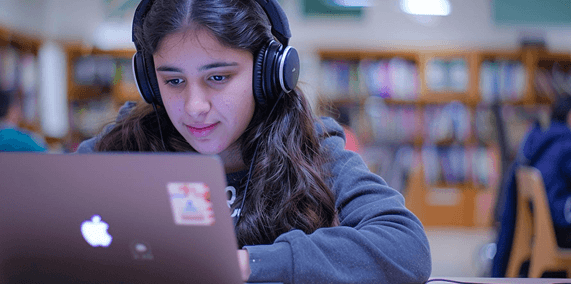
Parents rarely notice their child getting "better at code." They notice the homework problem that used to end in a slammed pencil now met with, "let me break this down." A wrong answer becomes information instead of a wall. That's the coding loop leaking into everything else: decompose, test, adjust, persist.
The systems underneath have a name, executive function (planning, focus, working memory, self-control), and they predict school performance more reliably than raw IQ. Studies show coding strengthens them measurably, sometimes within weeks.
What coding really trains
Built in code. Used everywhere.
The real gains aren't in the code itself. They're in planning, focus, and working memory, the executive-function skills that sit underneath maths, writing, and every subject your child will ever be tested on.
What This Means for Your Child
A child who knows a feed is built, not found, treats it differently. They are harder to manipulate, slower to take an algorithm's word as truth, and more likely to ask who benefits when a screen decides what they see next. That isn't paranoia. It's literacy. In a decade where AI will increasingly shape what your child reads, watches, and believes, understanding how those systems are made is one of the most practical forms of freedom you can give them.
Kids who code get measurably better at math and writing
A peer-reviewed study of fifth-graders using Google's CS First storytelling lessons found significant gains in writing scores, idea development, organization, grammar, and stamina. The math link is just as well documented: coding puts variables, functions, and logic to work for a visible purpose, so they become tools instead of rules to memorize.
The result across multiple studies is stronger mathematical intuition, in the two subjects schools assess most.
Writing scores climb
Documented gains in essay organization, grammar, idea development, and writing stamina.Maths becomes intuitive
Variables, functions, and logic turn into tools with a purpose, not rules to memorise.Measured, not assumed
Peer-reviewed studies in the two subjects schools assess most, not classroom anecdotes.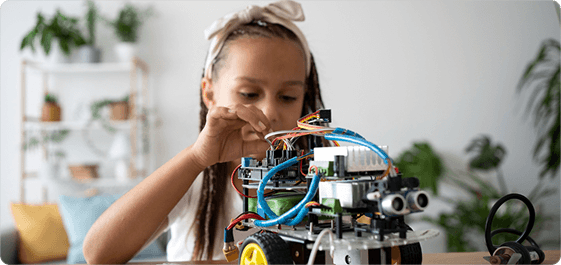
What This Means for Your Child
Maths and writing are usually where school feels hardest, and where kids get labelled early as "not a numbers person" or "not a writer." Coding quietly works against that. When a child uses a variable to make a game run, or sequences steps to tell a story in code, the abstract finally has a purpose. The shift parents report most is the one they expected least: a child who was wary of maths, or reluctant to write, starting to meet both with less dread and more curiosity.
Building real things builds real confidence
Most parents file coding under secondary school. The research points the other way. A controlled study of 437 children across two age bands (5-7 and 8-10) found both groups improved, with the larger gains in the younger children. Skills that feel almost effortless at seven take real effort to acquire by twelve.
Because these are foundational cognitive habits, an early start doesn't only help with coding. It compounds across math, writing, and science for years.
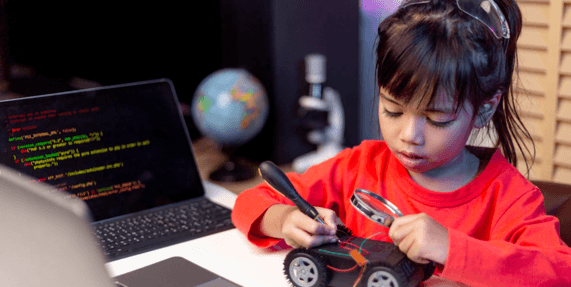
What debugging really teaches
Errors aren't failure. They're data.
Code breaks constantly, and fixing it teaches a child to treat mistakes as information, try another approach, and keep going. That habit has a name: resilience.
What This Means for Your Child
The confidence coding builds isn't the kind you can hand a child with praise. It's the kind they earn by making something that works and knowing exactly how they did it. And the debugging that frustrates them at first teaches the harder lesson underneath: being stuck is temporary, and the way out is to try the next thing. Parents tend to notice it as a child who rattles less easily, the one who meets a setback with "let me try something else" instead of shutting down.
Starting early compounds, and waiting has a cost
Most parents file coding under secondary school. The research points the other way. A controlled study of 437 children across two age bands (5-7 and 8-10) found both groups improved, with the larger gains in the younger children. Skills that feel almost effortless at seven take real effort to acquire by twelve.
Because these are foundational cognitive habits, an early start doesn't only help with coding. It compounds across maths, writing, and science for years.
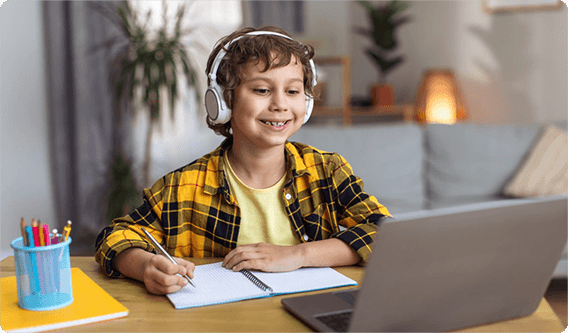
Why earlier wins
The younger the brain, the bigger the gain
In a controlled study of 437 children, the youngest group improved the most. The logical, structured thinking that feels almost effortless in the primary years takes far more effort to build once a child reaches secondary school.
What This Means for Your Child
The instinct to wait for secondary school is natural, and the research gently contradicts it. Primary school is when logic and structured thinking are easiest to absorb, and the habits a child builds then compound quietly across maths, writing, and science for years. There's no penalty for starting today. The only real cost sits in waiting for a "better time" that, by every measure, is already beginning to pass.
It's an advantage in every field, not just tech
The career case reaches well beyond software. A marketer who works fluently with data saves their team weeks. A manager who understands how AI tools work makes better decisions. The World Economic Forum's 2025 Future of Jobs report projects roughly 170 million new roles this decade, concentrated in AI, technology, and data.
Coding is becoming a cross-field skill, the way spreadsheets once were, rather than a niche for engineers. Across medicine, finance, design, and education, the people who understand how technology works will direct the people who don't.
The takeaway: your child isn't training for one job title. They're building the thinking almost every future role will assume.

What This Means for Your Child
A child who understands how technology thinks will not be replaced by AI. They will be the person directing it. That distinction will determine career trajectories in ways we are only beginning to map.
"When I was graduating, the obvious tactical thing was to get really good at coding. Getting good at AI tools is the new version of that."
— Sam Altman, CEO, OpenAI
It's the on-ramp to AI, robotics, and what comes next
Coding is the native language of robotics and the entry point to the wider world of STEM. A child who can give a computer precise instructions has already built the core skill that makes robotics feel intuitive rather than overwhelming. Research has shown children as young as six can program physical objects, developing spatial reasoning that reaches far beyond the screen.
It is also the foundation for AI itself. The path runs naturally from a first Scratch block, to Python, to building and understanding the AI tools that will shape your child's working life.
What This Means for Your Child
You don't need your child to become a roboticist or an AI engineer for this to matter. The point is optionality. A child who can already give a machine clear instructions holds the on-ramp to robotics, to AI, and to fields that don't have names yet, ready the moment their curiosity turns that way. Starting early doesn't decide your child's path. It quietly keeps the most future-facing doors open, so the choice stays theirs.
The best way to weigh 10 reasons is to watch one class
You don't have to decide from a page. Book one free lesson, watch how your child responds to building something that's theirs, and judge from there. It's live, 1-on-1, and there's nothing to set up.
Every parent I speak with wants the same thing: a child who is genuinely prepared for whatever comes next. What the research kept showing us, and what we see every day inside Codingal classrooms, is that one skill is doing more for children's cognitive development, academic confidence, and long-term resilience than almost anything else in the curriculum. The ten benefits on this page are peer-reviewed findings, replicated across thousands of children, and recognized by education policymakers worldwide. Coding does not just add a skill. It changes how a child thinks, how they handle difficulty, and how they see themselves when they face a problem they have never encountered before. That shift, once it happens, stays.

If you're wondering specifically what happens inside your child's brain when they code, Codingal's Co-founder & CEO Vivek Prakash's deep dive into the neuroscience is the clearest summary we've seen.
Impact on students
Helping children build confidence, curiosity and real skills
Explore our courses
Coding, AI, Math, and Public Speaking courses to spark creativity and future-ready skills, with flexible self-paced paths for every learner.

AI and Machine Learning
Master the fundamentals of AI and machine learning

ScratchプログラミングとAI
Learn coding with visual blocks and AI concepts

Python Champion
Become a Python programming expert

子ども向けゲーム開発
Create your own games from scratch

ウェブ開発
Build modern, responsive websites

ゲーム開発(子ども向け)
Create mobile apps for iOS and Android

ティーン向けAI・データサイエンス
Analyze data and build AI models

Roblox Champion
Design and code games on Roblox

APコンピュータサイエンスA
Prepare for the AP CS exam

IOI Algorithms
Master competitive programming
About Codingal
Codingal is a fast-growing edtech company on a mission to help kids fall in love with coding and AI through live classes and hands-on projects. What makes this journey special is our people: teachers, builders, and problem-solvers who genuinely care about learning.
We work as one team across curriculum, engineering, design, growth, operations, and support, always improving how we teach, how we train teachers, and how students learn. If you are a teacher who loves mentoring, or a parent looking for a learning experience that is personal, structured, and future-ready, welcome.

Frequently asked questions
More than ever. AI generates syntax, but it can't decide what's worth building, judge whether the result is correct, or weigh the trade-offs when there's no clean answer. Those are the human skills coding builds, and they grow more valuable as the tools get more capable. Your child being the one who directs AI, rather than the one who simply accepts its output, is the whole point.
Block-based and screen-free tools work from around ages 4 to 5, with 6 to 8 the sweet spot for the structured, logical thinking coding develops. Research consistently shows younger children often gain the most, and starting any time before secondary school still pays off. Earlier starters simply arrive at each stage with more to build on.
Yes, and it often works the opposite way to what parents expect. Early coding is closer to creative puzzle-solving than algebra, and giving abstract ideas a visible purpose tends to improve a child's confidence with maths rather than requiring it first. Many of the most fluent young coders were never the strongest maths students. They were the most persistent.
A child building with code is doing the cognitive opposite of a child passively scrolling, on the very same device. The research linking heavy screen use to weaker attention and disrupted sleep is about passive consumption, not active creation. Coding is one of the few ways to convert some of those screen hours from consuming into creating.
A live teacher can see the exact moment a child's reasoning breaks down and guide them through it in real time. Pre-recorded videos and passive apps cannot. That real-time guidance is the difference between a child who copies an answer and a child who understands how they reached it.
That is usually a format problem rather than a child problem, and enjoyment turns out to be the mechanism, not a bonus. Children who find coding genuinely fun return to it on their own, and that voluntary return is what builds real fluency. A free first lesson exists precisely so you can see whether it clicks before committing.
Documented benefits show up in maths through pattern recognition and applied logic, in writing through stronger organisation and stamina, and across the whole school day through better planning, focus, and self-correction. The thinking habits transfer well beyond the coding class itself.
Both, but the career case is strong. Computing roles are among the fastest-growing and best-paid globally, and coding is increasingly a cross-field skill for marketers, doctors, and designers, not only engineers. The World Economic Forum projects roughly 170 million new roles this decade, concentrated in AI, technology, and data. The deeper payoff, though, is the thinking it builds underneath any career.
Most children start with visual, block-based tools like Scratch, which teach the logic of coding without the friction of typing syntax. From there the natural path runs to text-based languages like Python, then into web, apps, AI, or robotics depending on what captures their interest. The right starting point depends on age and confidence more than ambition.
Consistency matters more than volume. A regular weekly session, with small projects in between, builds fluency far more effectively than occasional long bursts. The goal is steady momentum rather than intensity.
The research doesn't measure IQ directly, but the cognitive gains are specific and well documented. Coding strengthens executive function, the planning, working memory, and self-control that predict academic success more reliably than raw IQ, with the strongest effects in children aged 6 to 12. Whether that counts as "smarter" depends on how you define it, but it clearly builds the mental architecture that capable thinking relies on.
The honest answer is that coding asks for patience, and early progress can feel slow. Children who expect instant results sometimes find the first stretch of debugging frustrating, and cost or access can be real barriers for some families. The reassuring part is that when instruction is well structured, project-based, and guided by a teacher, that friction is temporary while the gains tend to last.
Not inherently, and for many children it is an easier entry point than they expect. Block-based tools remove the friction of typing and let kids focus on the logic, so the first wins come quickly. The harder part is usually patience with debugging, which is also where the most valuable thinking gets built.
Specific tools and languages will change, but the underlying thinking does not. Breaking a problem down, testing ideas, and reasoning through logic are skills that outlast any particular technology, including the AI tools that will keep evolving around your child. That is exactly why the goal is the way of thinking, not the syntax of one language.
Coding is the act of writing instructions in a programming language. Computational thinking is the broader set of skills coding develops: breaking problems down, spotting patterns, and designing step-by-step solutions. A child can use computational thinking without a computer, but coding is one of the most effective ways to build and practise it, and that thinking is what transfers far beyond programming.